
Product Kuala Lumpur
Miniature Worlds
Behind the Shot
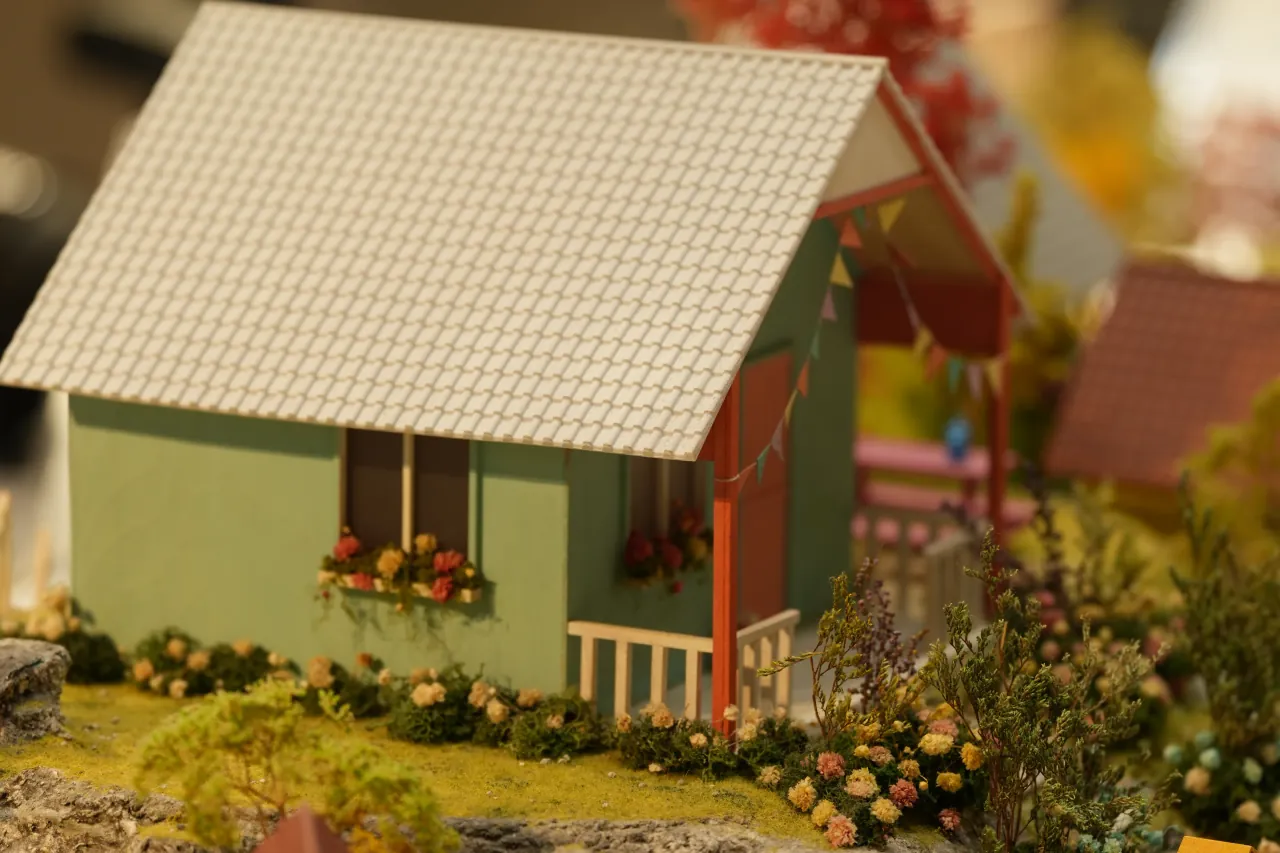
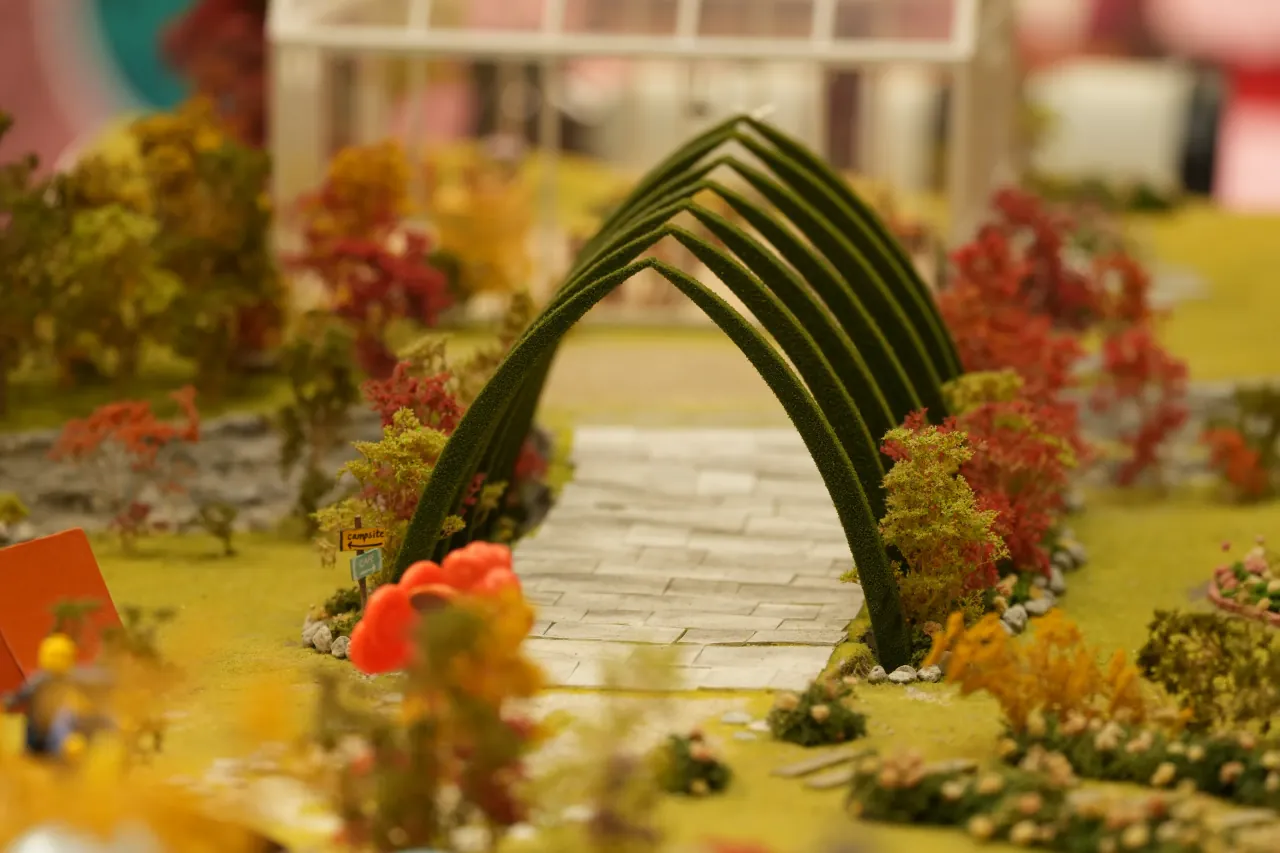
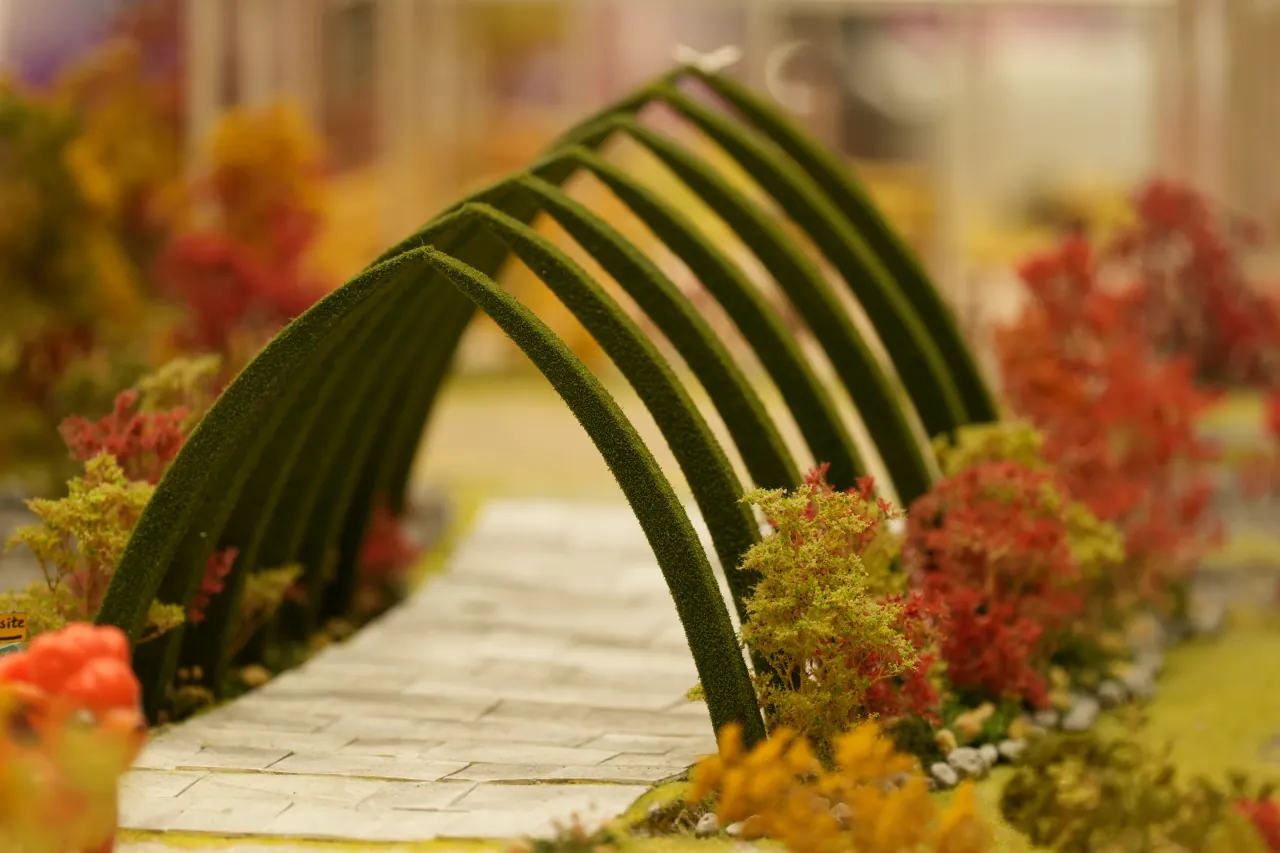
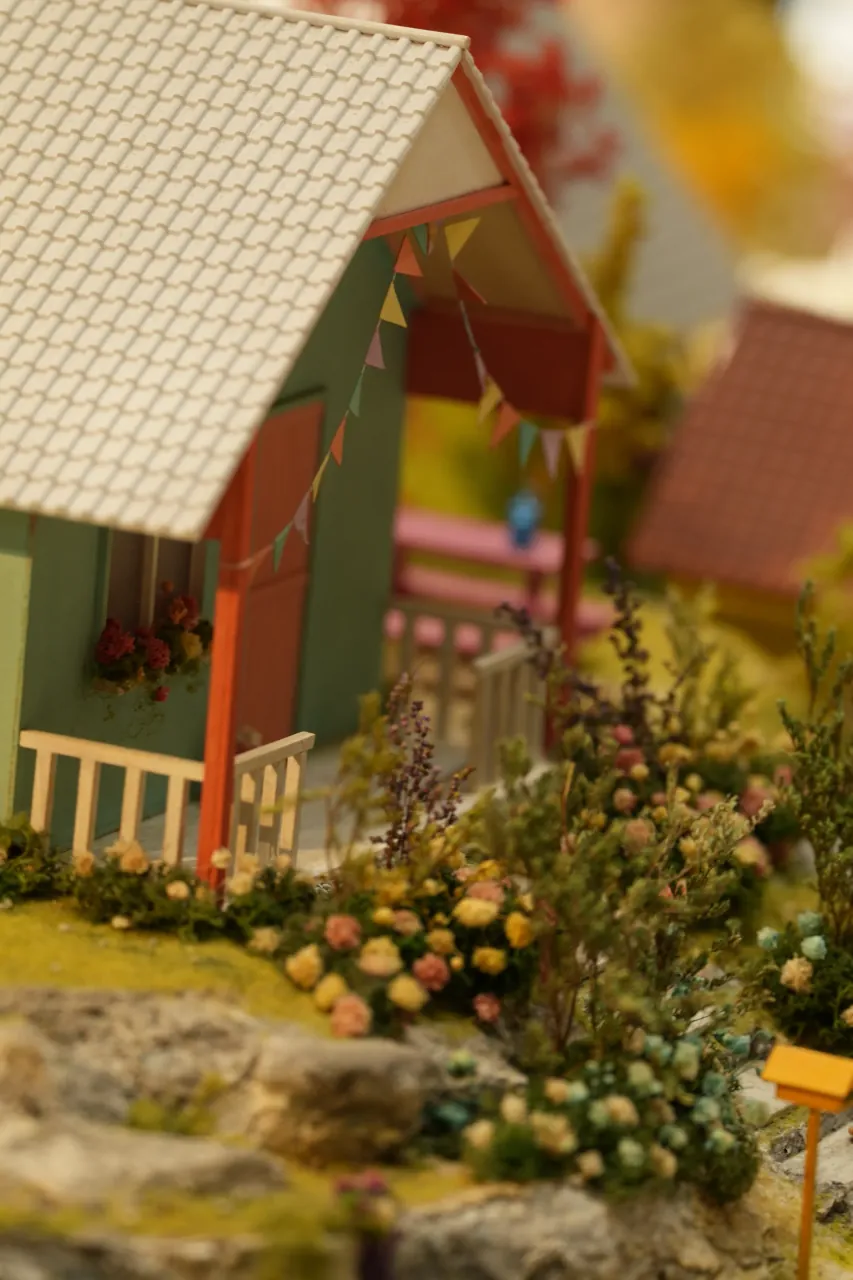
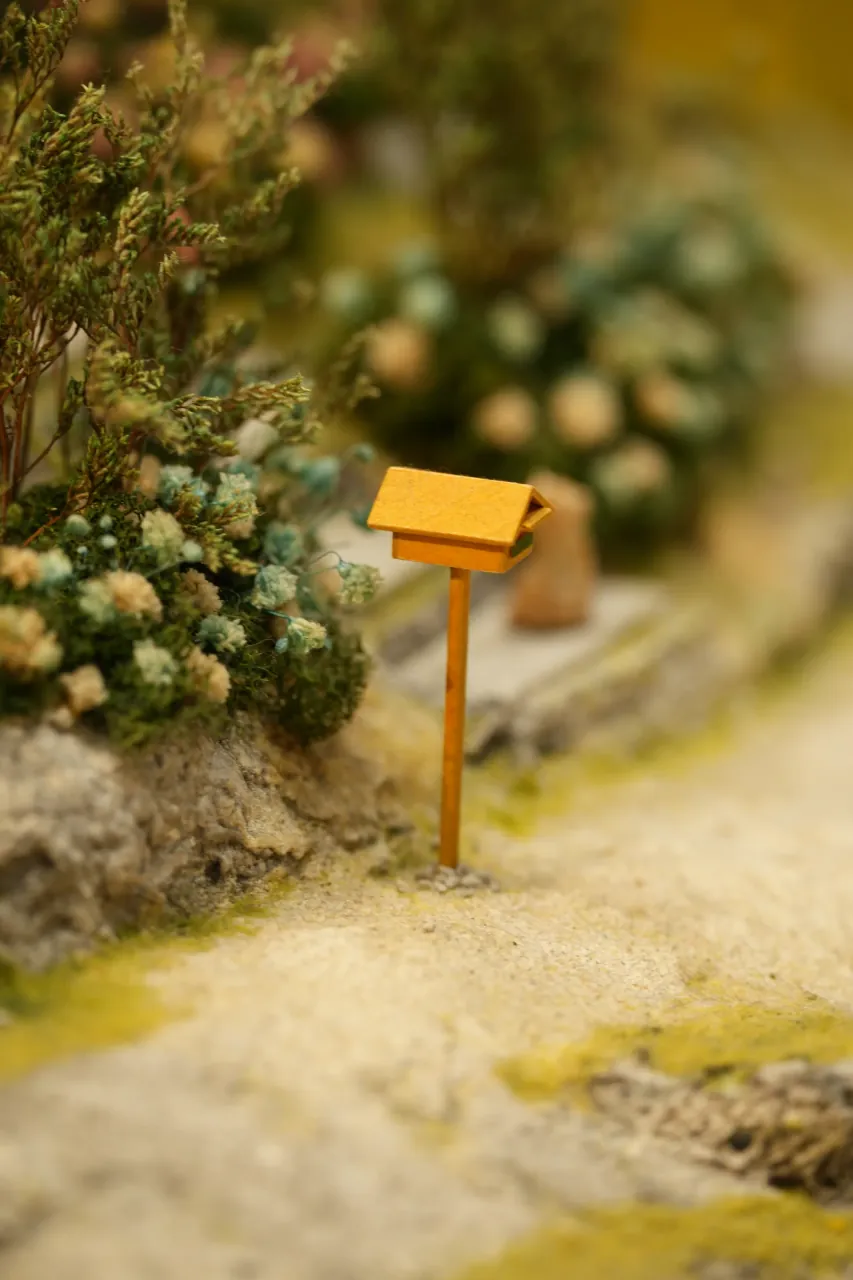
A close-focus study of a handbuilt diorama — an arched footbridge, a tiled cottage, a mailbox standing at the head of a garden path — photographed in Kuala Lumpur on the Sony A7V with the 100-400mm f/4.5 GM OSS, working between 181mm and 400mm. Long glass is an unusual choice for a subject that fits on a tabletop, and that is exactly the point. Reaching in from a distance with telephoto compression flattens the scene the way a real landscape reads across a valley, so a bridge you could span with one hand carries the visual weight of a full-size one. Move in close with a wide lens instead and the perspective gives the game away immediately: near edges stretch, far edges shrink, and the eye reads “small object” long before it reads “place”. The price of that reach is depth of field. At 400mm and f/4.5, focus at this working distance is a plane only millimetres deep — thin enough that the near lip of a roof tile can be razor-sharp while the ridge just behind it is already dissolving. Every frame here is a decision about where that plane lands and what it is allowed to give up. Sharpness goes on the one detail carrying the story, and the rest is surrendered on purpose. A miniature rendered sharp from front to back looks like a model; a miniature with believable falloff looks like a photograph of somewhere real. Light was handled the way it would be for any product destined for a shelf: a single shaped source, continuous rather than flash, so its effect on a surface this small could be judged by eye before the shutter ever moved. That choice costs shutter speed — these frames sit between 1/30 and 1/50 at ISO 320 — which means the camera stays locked off and nothing in the set moves. Backgrounds stay clean and unlit. Nothing competes with the subject. That discipline is what a brand selling a physical object is actually paying for. Whether the product is a collectible, a piece of jewellery, a bottle or a hand-finished craft item, the same three problems come back every time: how to make something small feel substantial, where to place the sharpness so the eye lands where you want it, and how to light a surface so its texture still survives compression down to a marketplace thumbnail on Shopee, Lazada or a brand’s own storefront. This series is that problem solved five ways.
02 / 05
03 / 05
04 / 05
05 / 05
5 images in this project